
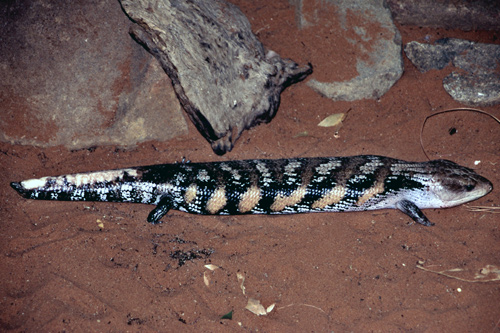
Australian Blue-Tongued Skink
 | ||
Swipe left for next & right for previous photo or view all
| ||
Blue-tongued skinks are endemic to Australia with the exception of one species that is also found in New Guinea. Being omnivorous, their diet consists of fruits, berries flowers, fungi, insects, and spiders. They exist in a wide range of environments from deserts to rainforests, and even suburban areas. They can grow up to 37cm depending on the species.
| Related pages More photos of lizards More fauna pictures Photos of Australia | Image (au0019.shtml) Buy this image Copyright information Embed or share this image. |
Author & photographer: David Johnson (Virtual Australia). Providing a credit or link is appreciated.
Our content: logos, site names, text, photos, and website design are protected by international copyright law.
Original versions of our photos can be purchased / licensed & web versions can be shared subject to conditions.