
Blue Mountains - photos
 |  |  |  |
 |  |  |  |
About Blue Mountains
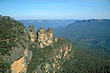
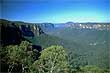
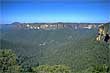
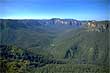
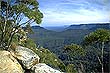
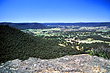
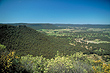
The Blue Mountains are approximately 100 km inland from Sydney. They are a sandstone range that reach nearly 1200 metres above sea level, but look more like a series of canyons with some gorges as deep as 760 metres from the top of the sandstone plateau. Most of the Blue Mountains area is part of the 'Greater Blue Mountains Area' a World Heritage Site which is made up of seven national parks and a nature reserve.
Thought to be impassable in the early history of Sydney, this suited authorities well because it deterred convicts from escaping in that direction. it wasn't till the year 1813 that they were finally crossed.
The name "Blue Mountains" is descriptive of a blue tinge that appears when viewing the mountains from a distance. This is caused by evaporating eucalyptus oil. This oil is actually flammable and one of the reasons why Australia is prone to bush fires as eucalypt is the predominate forest of Australia.
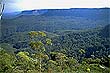
Besides eucalypt, heath and shrubs are present on the plateau edges high above the valleys. In sheltered gorges, lush temperate rainforests exist. The famous Wollemi Pine grows in some remote and deep valleys of Wollemi National Park. This tree was discovered in 1994 and was believed to be extinct for millions of years. Prior to its discovery, its existence was known from fossils formed during the mid-Cretaceous almost 100 million years ago.
Author & photographer: David Johnson (Virtual Australia). Providing a credit or link is appreciated.
Our content: logos, site names, text, photos, and website design are protected by international copyright law.
Original versions of our photos can be purchased / licensed & web versions can be shared subject to conditions.